Physical Address
304 North Cardinal St.
Dorchester Center, MA 02124
Physical Address
304 North Cardinal St.
Dorchester Center, MA 02124

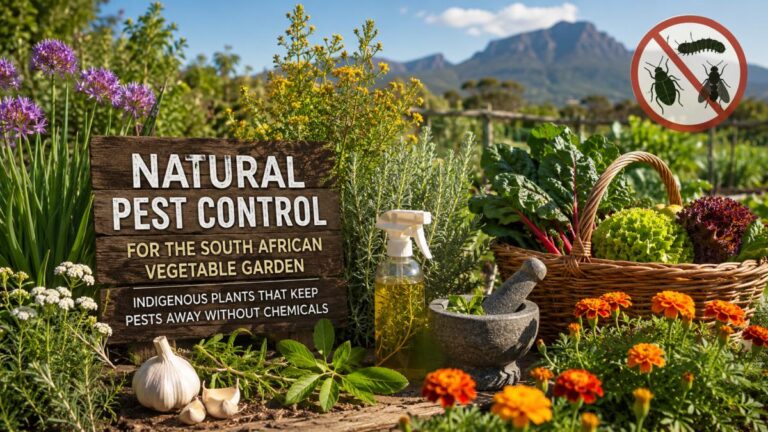
Once you decide to stop spraying synthetic pesticides on food you're going to eat, you're left with an obvious problem: the aphids, caterpillars, cutworms and fruit flies didn't get the memo. Opting out of the chemical shelf at the co-op is the easy part. The harder part is replacing it with something that actually works in a Highveld spring or a KwaZulu-Natal summer, using plants you can grow yourself rather than imported organic products with imported prices.
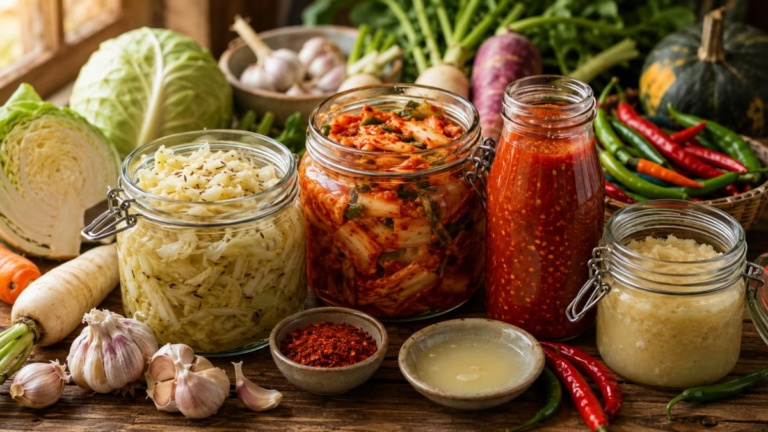
In part one we covered the foundation: the two percent salt rule, the submerge rule, and a Highveld sauerkraut that teaches your hands what a healthy ferment looks and smells like. Everything from here is a variation on that same theme. What changes is the vegetable, the seasoning, and how you use the result. This is where fermenting stops being a preservation chore and starts being a genuine kitchen upgrade. The condiments below are the ones you currently pay a premium for at the supermarket, in small jars, with ingredient lists you did not write. Made at home from garden produce, they cost almost nothing and taste considerably better.
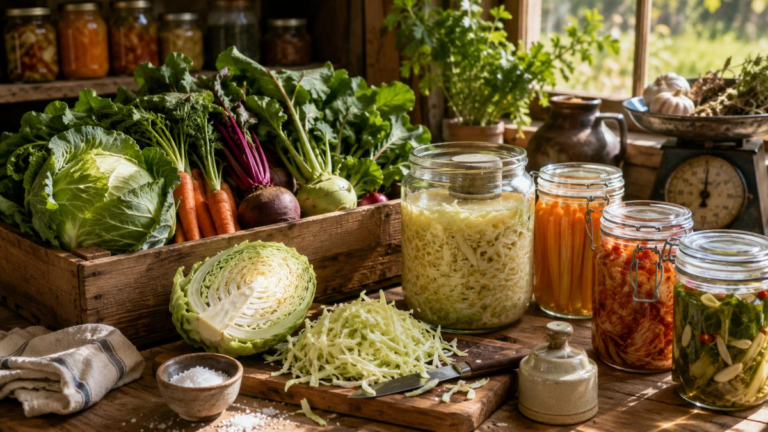
A full box of vegetables from your garden is a wonderful problem to have until week two, when half of it is soft and the other half has gone to the compost heap. Fresh produce keeps you honest for a few days and then it starts working against you. Fermenting changes that maths completely. With nothing more than salt, water, and a jar, you can turn a summer glut of cabbage or a winter surplus of carrots into food that stays good on a shelf for months, needs no electricity, and quietly rebuilds the kind of pantry that stops you running to the shops every time a recipe calls for something.

There is a particular kind of unease that settles in when you read that the bread in your kitchen, the maize meal in your pantry, and the jar of food you spoon into a toddler's mouth all carry traces of farm chemicals. That unease is exactly what landed on South African kitchen tables in June 2026, when independent laboratory testing commissioned by a Johannesburg research and advocacy organisation found pesticide residues in the overwhelming majority of everyday supermarket foods it sampled. The headline number was hard to ignore: residues turned up in 86 percent of the products tested.
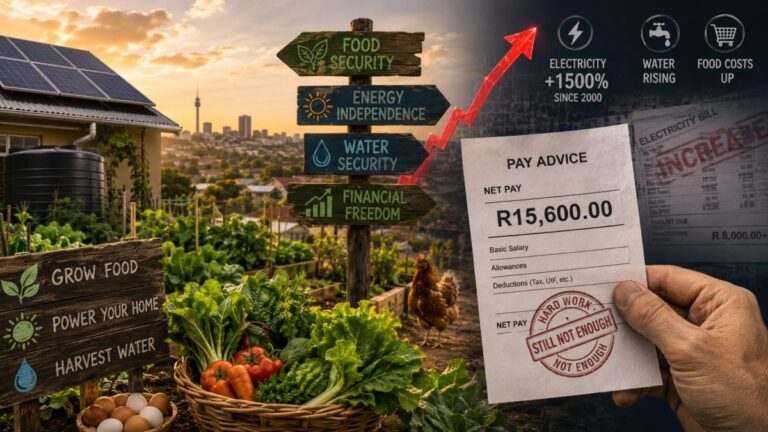
There is a number floating around right now that should make every working South African stop and do some arithmetic. According to the Living Wage South Africa Network, a single person needs to take home around R20,000 net per month to live what they call a humble but decent life. That is after tax and deductions, before any benefits like medical aid. The network arrived at the figure by surveying 2,000 people and finding that those below R14,000 a month generally could not live decently, while those above R25,000 mostly could. R20,000 is the midpoint.
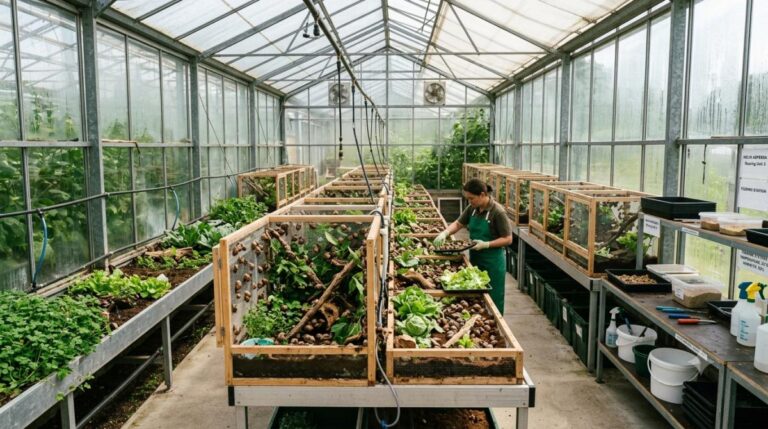
A snail farm near Centurion has been quietly turning a backyard greenhouse into a working business, and the headline numbers from operations like it are eye-catching enough to pull anyone in. But before you picture a money tree made of shells, it helps to flip the question around. Strip out the sales pitch and ask what a small snail colony actually does for a self-sufficient homestead, and you land somewhere more useful than a get-rich-quick scheme. Snails are not really a casual food crop in our climate. They are, however, a genuinely interesting node in a closed-loop garden system, a source of a high-value skincare ingredient, and only then, with serious infrastructure, a possible income stream.
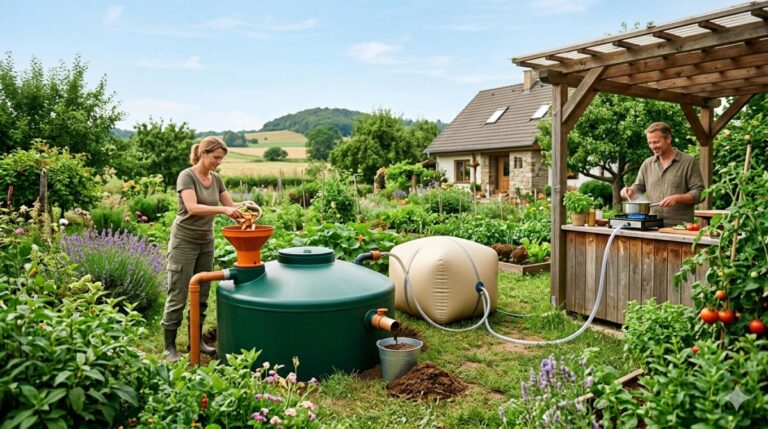
Every South African home throws away two things at once: a bin full of food scraps headed for the landfill, and money on a gas bottle or an electricity account that climbs every year. A biogas digester closes that loop. You feed it the peelings, the plate scrapings and the garden waste, it hands back gas you can cook on, and what's left over comes out as a rich liquid fertiliser for the veg patch. Nothing wasted, the cycle running on what your household already produces daily.
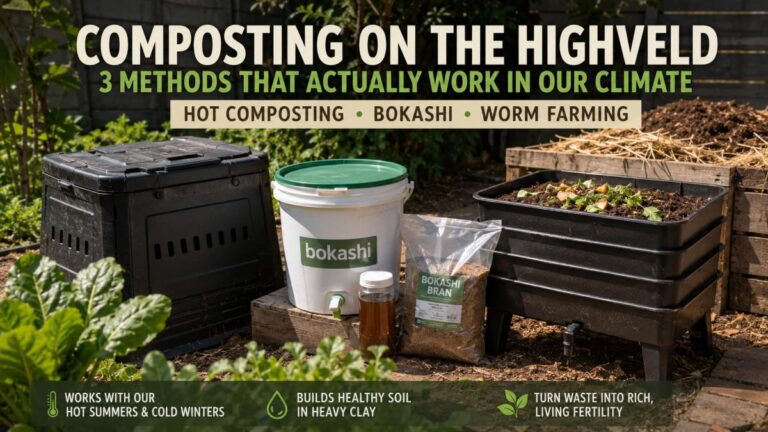
Every South African gardener who has tried to make compost knows the frustration. You build a tidy heap in spring, full of good intentions, and by midsummer it has either baked into a dry brown brick or collapsed into a sour, fly-ridden mess. The Highveld punishes half-measures. Our summers bring fierce afternoon heat and violent thunderstorms, while winter nights routinely drop below freezing across Gauteng, the Free State, and Mpumalanga. Add load-shedding, water restrictions, and our notoriously heavy clay soils, and it becomes clear that composting advice written for the mild English garden simply does not apply here.

The cost of living has crept into every corner of South African life. We feel it queuing at the fuel pump, and we feel it again at the supermarket till when the same trolley costs more than it did a few months ago. When every rand has to stretch further at home, the giving that many of us would do for a good cause naturally gets squeezed, and the organisations that depend on that generosity feel the pinch long before the rest of us notice.

There is a small municipality in the Free State that did something almost no other community in South Africa has managed to do: it stopped waiting. While towns across the country sink under collapsing infrastructure, dry taps, sewage in the streets and municipal debt that runs into the billions, the towns of the Mafube Local Municipality — Frankfort, Villiers, Tweeling and Cornelia — quietly went the other way. The grid got rebuilt. The lights stayed on more often. Bills got paid. And eventually, the community started generating its own electricity.